Guide
Basilica of Santa Margherita, Cortona: A Visitor's Guide
Walk in for the first time and your eyes will probably go hunting for “the tomb”, without quite knowing where to look. The Sanctuary of Santa Margherita in Cortona holds the same woman in two different forms. There’s a silver urn containing her body, and there’s a carved tomb: two separate things under one roof, up on the hill above Cortona1. Mix them up and you’ll leave thinking you’ve seen everything, with half the visit still ahead of you.
This guide covers how to read the sanctuary before you step through the door, how to tackle the climb, and when in the day the silence runs deepest. Of all the spiritual places in Cortona, this is one that asks something of your legs, and it pays you back with a calm you won’t find down in town.
The short version, before you set off
- It stands on the hill above Cortona1.
- It holds the silver urn with the saint’s body, and her carved tomb.
- Opening times and Mass times can change. Check them on the day, before you start climbing. We’re always happy to look them up for you at reception.
- Wear shoes with decent grip, carry water in the warmer months, and bring something to cover your shoulders and legs.
Where it is and how to get up there
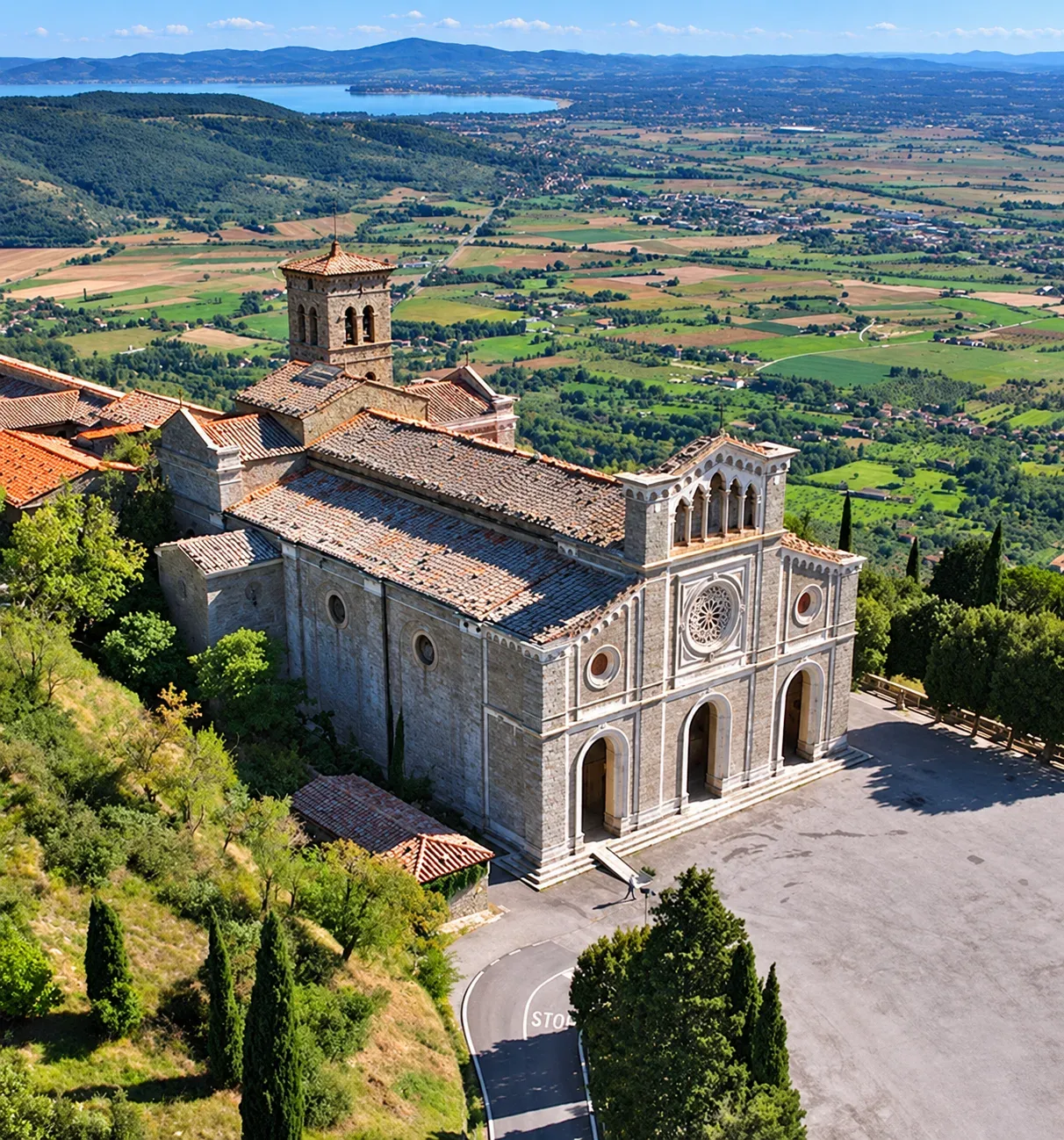
The sanctuary sits on the hill above Cortona1, high over the tight weave of houses and alleys in the old town. You reach it on foot, uphill, and the walk is as much a part of the experience as anything inside. Forget about “popping up” between a coffee in the piazza and lunch. Give it a morning of its own, with nothing booked for straight afterwards.
Cortona’s streets are steep, paved with stone slabs and often stepped. If you come from somewhere flat, your calves will notice within minutes. Take it slowly, stop when you’re short of breath, and turn round to look back. Every pause gives you a different view over rooftops and countryside.
In summer, go early in the morning or late in the afternoon. At two o’clock on a July afternoon the stone throws the heat back at you and the climb becomes pointless hard work. In winter rain the slabs can get slippery, and soles that grip will matter more than any jacket.
If walking is difficult for you, have a word with us before you head out. We’ll work out the best route and the right time of day together, so you know exactly what you’re in for. For many visitors, the walk up to the Sanctuary of Santa Margherita turns into a small inner pilgrimage, best done quietly and without watching the clock.
Why it’s called a sanctuary
In Italian, a “santuario” is a place of pilgrimage tied to a venerated figure, and the official source calls this one the Santuario di Santa Margherita da Cortona1.
The silver urn and the carved tomb: two different things
This is the detail that makes the visit worthwhile on its own, and the one people most often get wrong. The saint is present here in two ways, and it pays to look for each one separately.
The first is the silver urn, which holds her body1. It’s the heart of the devotion here, and you may well find someone kneeling in prayer in front of it.
The second is the carved tomb1. It moves at a different pace. It invites you to come closer and take in the details slowly. If you love art, this is where you’ll linger longest.
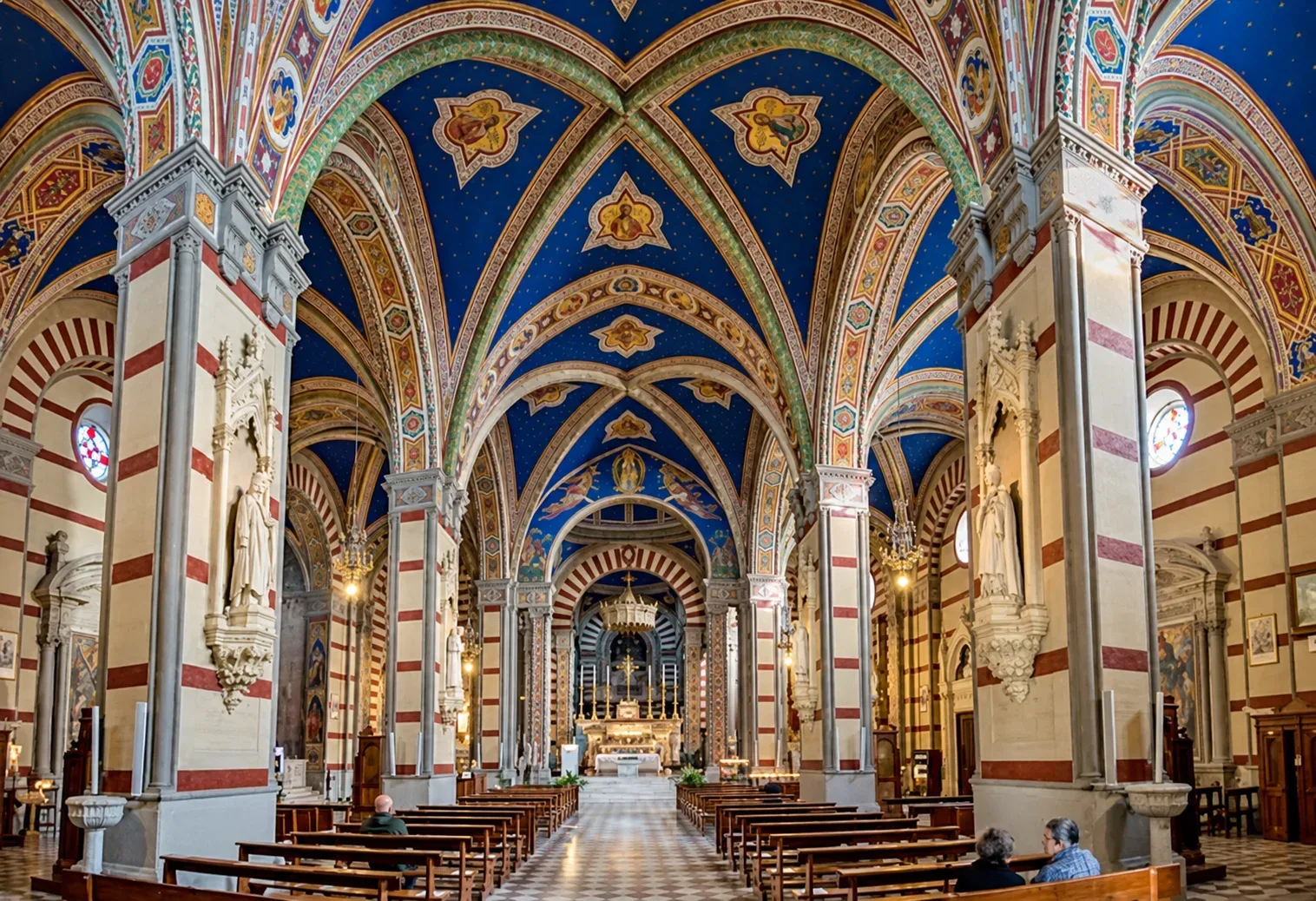
One approach works particularly well: split the visit in two. Go in, sit at the back of the nave for a few minutes and let your eyes adjust to the light. Then head to the urn first, quietly, and only afterwards go looking for the carved tomb with an observer’s patience. That way the moment for reflection and the moment for curiosity each get their own time.
If you’d like to know who the woman resting here was, her life is told in the story of Santa Margherita. Arriving with that story in mind changes the way you see the urn.
Taking in the interior slowly
After the climb, the temptation is to walk in, snap the altar and leave. Don’t. The sanctuary only reveals itself if you give it some time.
Start with the light. Notice where it comes in, how it falls across the floor, how it shifts when a cloud drifts over the hill. Then listen. In a working sanctuary you’ll hear slow footsteps, a door eased shut, sometimes a whispered prayer. The sounds are so few that you catch every one.
Only then turn to the artworks, one at a time, without trying to “see it all”. Pick a handful that speak to you and stay with each a few minutes longer than you would in a museum. Allow yourself a few minutes on a pew, too, without saying anything.
Visiting respectfully in a living place of worship
The sanctuary holds the saint’s body1 and is a place of worship. Going in with that in mind makes the visit richer, believer or not.
A few practical points:
- Cover your shoulders and knees. A light scarf in your bag sorts this out, even in August.
- Lower your voice while you’re still outside on the church steps.
- If Mass is under way, stay at the back or come back later. Wandering between the pews during a service disturbs the people taking part.
- Take photos discreetly, with no flash, and never of people praying at the urn.
- Switch your phone to silent, vibrate included.
Small things that change the atmosphere for everyone, yourself included.
When’s the best time to go up?
Early morning and late afternoon are best, when the climb is cooler and the light softer. Unless you want to join a service, avoid timing your visit right before one.
Early mornings tend to feel more hushed, which makes them ideal if silence is what you’re after. In the late afternoon your walk down coincides with the hours when the countryside takes on colour, and heading back into town as the first lights come on is a lovely way to end the day.
Spring and autumn are kindest on the legs. Winter has a charm of its own and a quieter feel. In summer, factor in the heat and plan the climb around it.
On the saint’s feast days you’re likely to find more people about. If you’d like to experience that atmosphere, check the programme of celebrations in advance. If you’re looking for quiet, pick another day.
Other places of the spirit to pair it with
After the sanctuary, plenty of visitors want to hold on to that calm a little longer before heading back among the shops. Cortona has several places that lend themselves to an unhurried day of their own.
You could set aside another morning for the Santuario del Calcinaio, or spend some time in the Church of San Francesco. Lovers of sacred architecture often add the church of Santa Maria Nuova. And if you hear bells ringing while you’re up on the hill, the story of Cortona’s bells gives that sound a whole new meaning.
Our advice is not to cram too many places into one day. You’d see the last one through tired eyes, and all you’d take home is the rush.
Setting off from the hotel, and coming back to rest
From Hotel Villa Santa Margherita you can plan your walk up to the sanctuary at an easy pace. Go on foot, in your own time.
Once you’re back down, give yourself a little rest before moving on. Returning to somewhere peaceful after a visit like this helps the feeling last.
If you’d like to prepare for the climb, drop by reception the evening before. We’ll help you pick the right time for the weather, check that day’s opening times and work out how much time to keep free. Your legs and the hill will take care of the rest.
Are the tomb and the urn the same thing?
No. The sanctuary contains the silver urn holding the saint’s body and a carved tomb: two separate things, and both are worth seeking out1.
Do I need to book?
It’s worth checking beforehand. Opening times and access arrangements can change, so confirm them on the day before you set off.
How much time should I allow?
Err on the generous side. Between the climb with its stops, your time inside and the walk back down, keep half a day free, so your watch can stay in your pocket while you’re at the urn.
Can I visit with children?
Yes, as long as they’re happy to walk uphill and stay quiet for a while. Explain beforehand that it’s a place of prayer, and the visit becomes a small adventure of its own.