Guide
Farneta Abbey near Cortona: History and Visiting Tips
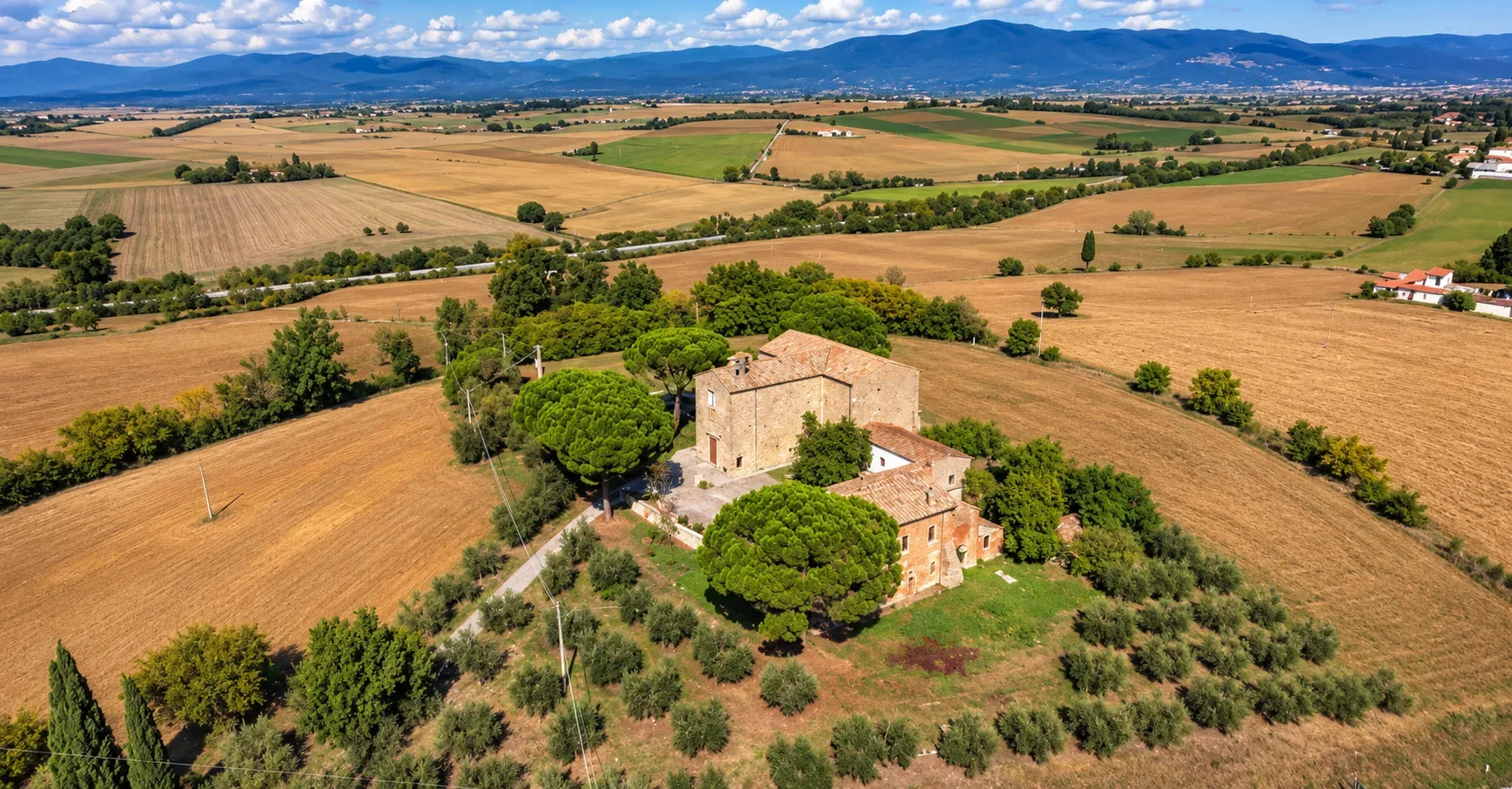
Farneta Abbey is now a parish church dedicated to Santa Maria Assunta, out in the countryside of the Cortona municipality, and its doors open every day to anyone who comes in quietly. Below you’ll find its history told date by date, the people who kept it alive, and the best way to visit at an easy pace, well away from the crowds.
When was Farneta Abbey founded?
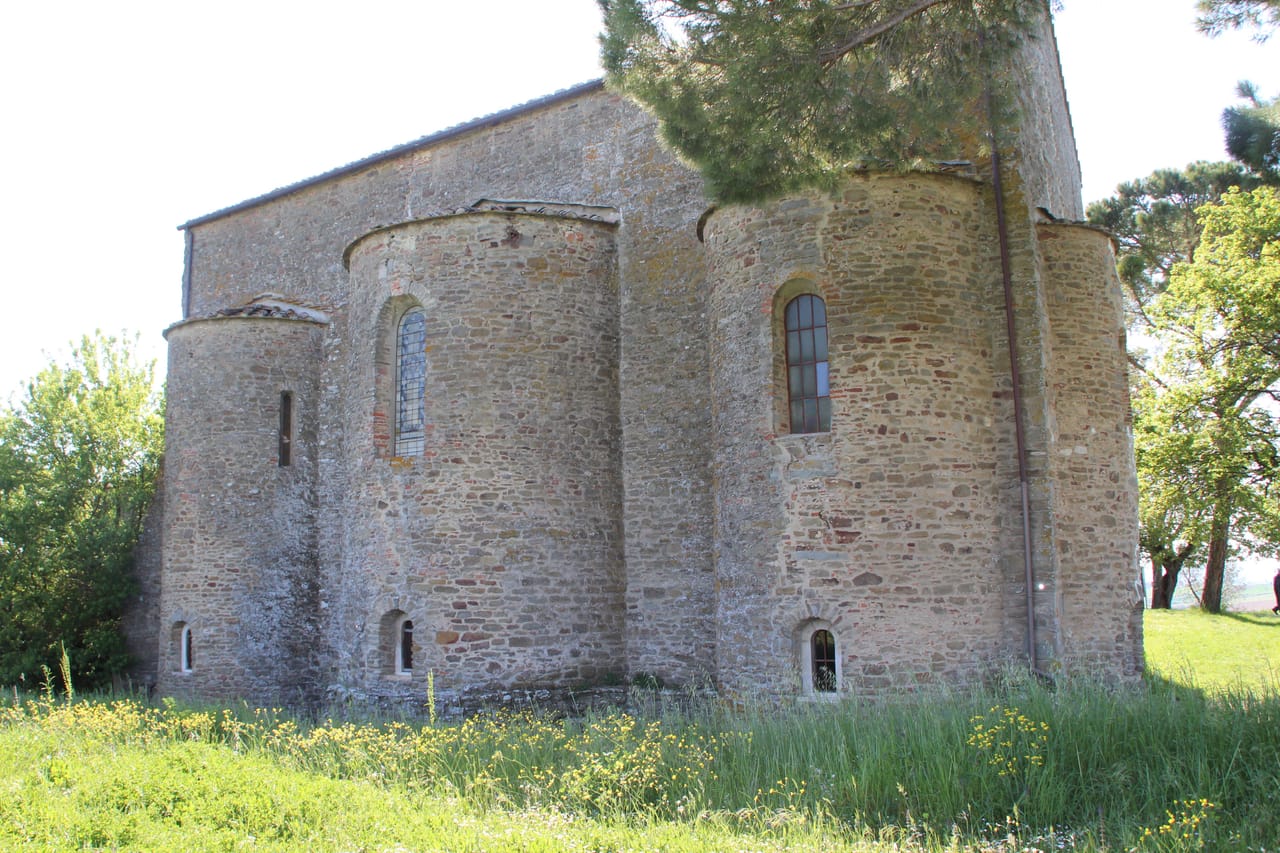
Benedictine monks founded the abbey sometime between the 9th and 10th centuries, and the parish dates its origins to the 9th.1 The earliest abbot on record, Martino, appears in 1036.2
The table traces the monastic community at Farneta through the centuries, using the dates the parish has preserved.
| Year | What happened |
|---|---|
| 9th-10th century | Founded by Benedictine monks |
| 1036 | Martino, the first documented abbot, signs the acts of the Roman Synod |
| 1140 | Pope Innocent II sends the abbot a papal bull |
| 1238 | Gregory IX grants a privilege, dated at Foligno on 13 December |
| 1320 | Sandstone inscription of Abbot Reinerus de Recanato |
| c. 1450 | Pope Nicholas V turns the abbey into a commendam |
| 1500 | After the commendatory abbots, the Olivetan monks arrive |
| 1779 | The monastery is suppressed |
| 1780 | The abbey passes to the Diocese of Cortona |
Abbots, popes and a stone inscription
Medieval records show a monastery with a direct line to Rome. In 1036 Abbot Martino takes his seat at the Roman Synod and signs its acts. A century later, in 1140, Innocent II writes to the abbot by papal bull. On 13 December 1238, Gregory IX grants a privilege from Foligno.2 When pope after pope takes an interest in a rural community in the Val di Chiana, you get a fair sense of how much Farneta mattered back then.
Then there’s the stone. In 1320 Abbot Reinerus de Recanato had his name carved into a sandstone inscription.2
From commendam to suppression: three centuries of change
Around 1450, Pope Nicholas V turned the abbey into a commendam. In practice, its income went to an outside holder who often didn’t even live at the monastery. From 1514 to 1529 the commendam belonged to Cardinal Silvio Passerini. After that, until 1538, the Chapter of Cortona Cathedral ran the place (the records themselves put a question mark next to the start date, 1529).2
The parish places the arrival of the Olivetan monks at Farneta in 1500, once the commendatory abbots had come and gone.1 The dates in the list of abbots tell a messier story, though: the commendam and the Chapter’s administration carry on well past that year, so one phase didn’t neatly hand over to the next.2 Monastic life went on for a long time all the same. In 1724 Abbot Borghesi paid out of his own pocket to have the great bell repaired.2
1779 brought the end. The monastery was suppressed, and on 20 November that year Don Pietro Bartolini became Farneta’s first secular prior.2 From 1780 the abbey belonged to the Diocese of Cortona.1 Within a single year, a monastery had become a country parish.
S. Felici, the abbey’s historian
To understand Farneta today, there’s one name you need to know. S. Felici’s book L’Abbazia di Farneta in Val di Chiana, in its 1994 edition, is where the parish took its list of abbots and priors, along with many of the dates above.2
What to look for inside Santa Maria Assunta
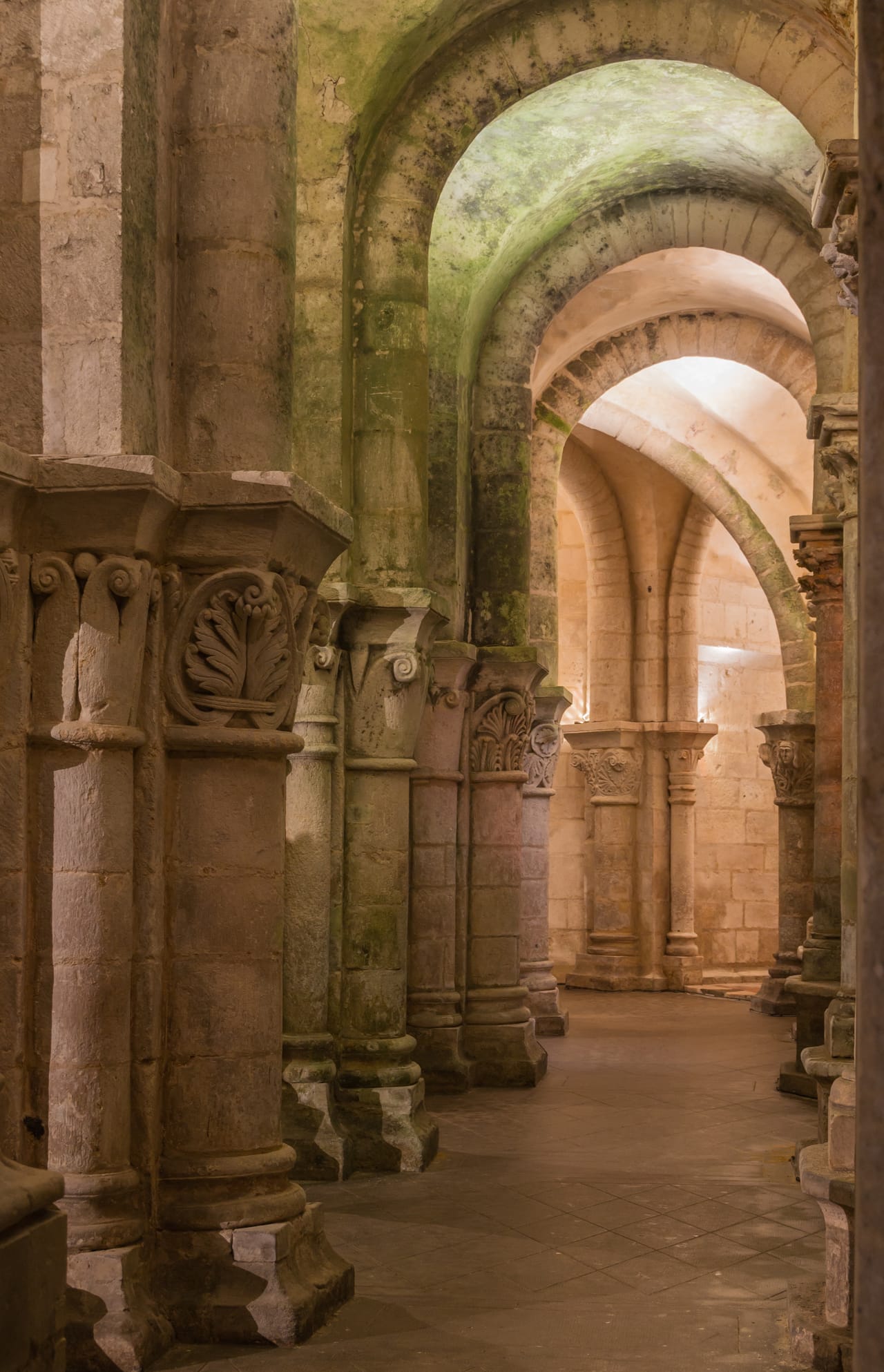
Step inside and give yourself a few minutes before you start wandering. The parish calls the abbey a “true pearl of art in the Val di Chiana” and keeps coming back to one quality: its simplicity.1 There’s little ornament here and a great deal of stone, and that changes how you look.
Three things to do while you’re there:
- Sit at the back of the nave and watch the light shift across the stone while you stay still.
- Look for the marks of time in the walls. A building that went from Benedictine monastery to commendam, then to the Olivetans and finally to a parish, wears every one of those changes.
- Take the silence seriously. Believer or not, it’s the pace this place asks of you.
Visiting Farneta Abbey: opening hours and practical info
Farneta Abbey is open every day from 8:30am to 7pm. On Sundays and holy days of obligation, Mass is at 11:15am, so either plan your visit around it or join in quietly.1
At a glance (from the parish website)
- Address: Località Farneta, 52044 Cortona (AR)
- Open: daily, 8:30am-7pm
- Sunday and holy day Mass: 11:15am
As with any place of worship, dress respectfully. If you’re travelling on a religious holiday or want details on special events, get in touch with the parish before you set off, as times can change. For the best light, go in the morning, while the surrounding countryside is still cool. Farneta is an easy drive from town, across the flat farmland of the Val di Chiana.
A slow morning between Cortona and Farneta
This is a day that keeps monastic hours. Set off early, while Cortona is still quiet, and head down to the plain. Get to Farneta shortly after it opens and give the abbey a full hour, phone in your pocket. Sit down, take in the stone, and run back through the dates on this page in front of the walls that lived through them.
In the afternoon you can follow the area’s spiritual trail. Up in the hills there’s the Eremo Le Celle, where you can feel the Franciscan presence in the sound of running water, plus the convents and cloisters of the old town and the small oratories tucked away down its lanes. Together with Farneta, they make up a map of Cortona’s spiritual sites best explored without hurrying.
Back at the Hotel Villa Santa Margherita, the evening moves at its own speed. Wind down slowly, looking out over the same Valdichiana you crossed that morning, as the light fades on the fields where the Benedictines chose to settle centuries ago.